
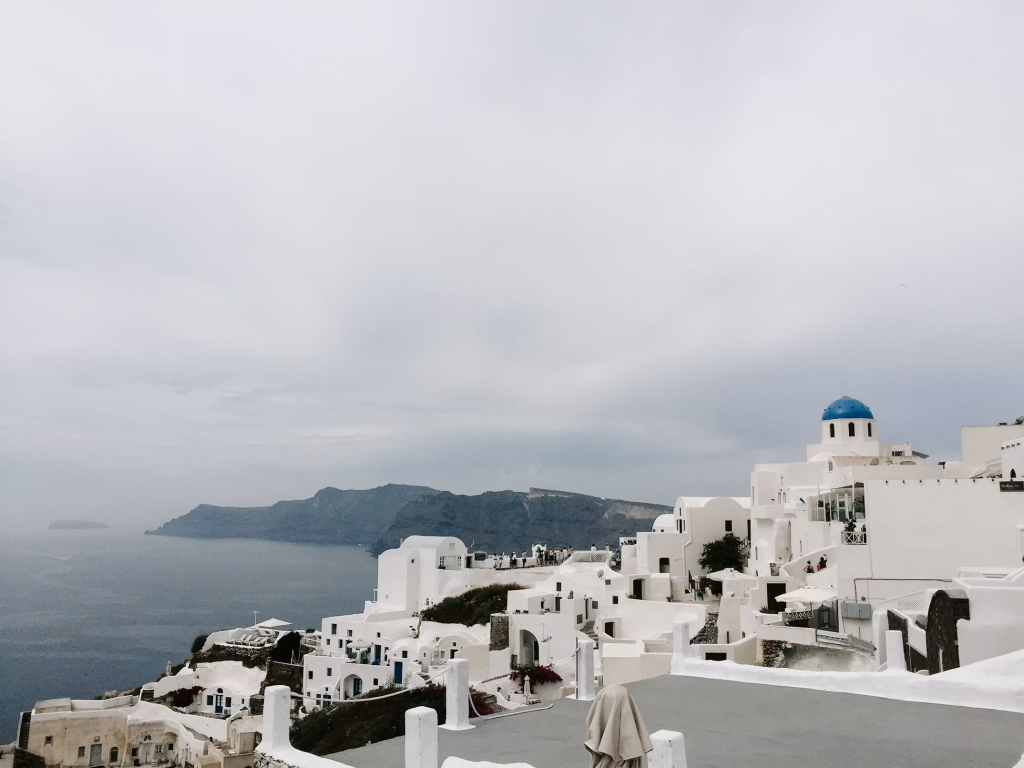
Whitewashed cubes stacked against a caldera, blue domes catching the afternoon light, a terrace cocktail priced like a small appliance – Santorini built its reputation on being seen rather than simply visited. For decades that look belonged to whoever could afford a villa in Oia or a suite with a private plunge pool. Everyone else got the postcard version, admired from a screen.
That gap has narrowed faster than most people assume. Fashion labels, home decor brands, and lifestyle retailers have spent the last several years translating the aesthetic into things ordinary shoppers can actually buy – linen shirts, ceramic tableware, sun-bleached furniture, skincare lines built around olive oil and sea salt. A brand like slimking sits comfortably in that space, offering pieces inspired by the same Cycladic palette without requiring a private charter to enjoy them. The island’s visual language, once gated behind five-star pricing, now shows up in living rooms and wardrobes that never left the mainland.
What “Santorini Style” Actually Means
Strip away the marketing gloss and the aesthetic rests on a handful of consistent elements: whitewash rendered over volcanic stone, blue accents pulled from church domes and shutters, minimal ornamentation, and materials that look weathered by sun and salt rather than factory-fresh. Architects on the island originally chose these features for practical reasons – thick walls kept interiors cool, white reflected heat, curved surfaces resisted wind.
Only later did the look become shorthand for luxury. Photographers and influencers flattened those functional choices into a single, marketable image: the infinity pool against the caldera at golden hour. That image is what most people mean by “Santorini style,” even though the island itself has dusty roads and modest homes far from the cliffside hotels.
From Architecture to Consumer Goods
Once a visual style gets identified and named, it becomes exportable. Interior brands started producing furniture with rounded edges and matte white finishes. Textile companies leaned into raw linen and rope details, none of it requiring volcanic stone or a caldera view – just a consistent colour story.
The Economics Behind the Shift
Luxury travel still commands premium pricing, and Santorini hasn’t gotten cheaper. Peak-season hotel rates on the caldera side remain among the highest in the Mediterranean. What changed is the supply chain around the aesthetic.
| Santorini Experience | Original Cost Barrier | Democratised Version |
| Caldera-view suite | $800–2,000/night | Framed print or wallpaper mural |
| Designer linen resort wear | Boutique pricing, limited stock | Fast-fashion and DTC linen lines |
| Private sunset yacht tour | $500+ per group | Livestreamed sunset content |
| Handmade Cycladic ceramics | Artisan workshop prices | Mass-produced tableware lines |
| Volcanic clay skincare | Spa treatment exclusivity | Retail skincare with similar ingredients |
Manufacturing efficiency did most of the work. Once a factory can replicate a ceramic bowl at scale, the price collapses while the visual reference stays intact.
Social Media as the Great Equalizer
Instagram and TikTok flattened the distance between the exclusive resort and the everyday scroller. A single well-lit photo of a blue-domed church spreads the aesthetic further than any travel brochure, and it costs the viewer nothing to absorb it. Algorithms reward visually consistent content, pushing creators toward repeating the same palette until it became recognisable outside any geographic context.
That recognisability is what retail brands needed. A shopper doesn’t need to have visited Greece to want a candle that evokes it – seeing enough images is often enough to link the colours with relaxation and aspiration.
Who Benefits and Who Gets Left Out
Democratisation rarely spreads evenly. Local producers on the island – actual Santorini ceramicists, winemakers, textile workers – often see limited financial upside from the global trend, since most revenue flows to retailers operating far from the Cyclades. The aesthetic gets exported; the economic benefit doesn’t always follow.
The Authenticity Question
Purists argue that mass-market versions strip meaning out of the style, reducing centuries of vernacular architecture to a colour palette anyone can license. There’s a fair point in that criticism – a plastic pitcher moulded to look weathered isn’t the same as one shaped by generations of local craft. But there’s a counterargument too: broader access to a visual tradition, even diluted, introduces more people to the underlying culture than exclusivity ever did.
What This Means for Everyday Shoppers
- Expect continued growth in home goods lines referencing whitewash-and-blue palettes
- Watch for skincare brands leaning on Mediterranean ingredient stories
- Anticipate more affordable travel-adjacent products that substitute for the trip itself
- Notice how quickly a regional aesthetic becomes a generic lifestyle category
None of this requires cynicism about the trend. Style migrating from an exclusive destination into accessible retail is simply how consumer culture has always worked, just faster now.
The Bigger Pattern
Santorini isn’t unique here – Provence, Tuscany, and the Amalfi Coast have all undergone similar translations from lived place to marketable mood. What makes the Greek island notable is the speed of the shift, helped by an image so visually distinct it barely needs context. The caldera view still belongs to whoever can pay for it. The colour story and the general feeling of sun-warmed simplicity now belong to anyone with a shopping cart, and the gap between the two keeps getting harder to notice from a distance.
